---
title: "SAP S/4HANA Overview: What is SAP S/4HANA? | SAP PRESS"
description: SAP S/4HANA is SAP's leading ERP solution. Explore its history; capabilities for finance, logistics, and other LoBs; deployment options; and more.
---
[](https://www.sap-press.com/)
- Books
- Get an overview of our books and courses on every relevant SAP topic.
- [Programming](https://sap-press.com/programming/)
- [Administration](https://sap-press.com/administration/)
- [BI](https://sap-press.com/business-intelligence/)
- [Finance](https://sap-press.com/finance-controlling/)
- [Logistics](https://sap-press.com/logistics/)
- [HR](https://sap-press.com/human-resources/)
- [CRM & Sales](https://sap-press.com/marketing-sales/)
- [HANA](https://sap-press.com/hana/)
- [Introductions](https://sap-press.com/introductions/)
- [E-Bites](https://sap-press.com/e-bites/)
- [Certification Guides](https://www.sap-press.com/certification-guides/)
- [Rheinwerk Courses](https://www.sap-press.com/online-courses/)
- Book Subscription
- Get unlimited access to all SAP PRESS books!
- [SAP PRESS Subscription](https://sap-press.com/subscriptions/)

# SAP S/4HANA Overview and Learning Guide
*Reviewed by the SAP PRESS editorial team.*
## TL;DR
SAP S/4HANA is SAP’s current enterprise application suite. First released in 2015, the platform is considered the biggest change to SAP’s core offerings since the introduction of the R/3 system in 1992. It is made up of a number of lines of business that focus on different areas of an enterprise, such as finance, logistics, sales, R&D, and HR.
## Table of Contents
1. [History of SAP S/4HANA](https://learning.sap-press.com/sap-s4hana-overview-benefits#sap-s4hana-history)
2. [SAP S/4HANA Innovations](https://learning.sap-press.com/sap-s4hana-overview-benefits#s4-hana-logistics-innovations)
1. [New Functionality](https://learning.sap-press.com/sap-s4hana-overview-benefits#new-functionality)
2. [Simplification List](https://learning.sap-press.com/sap-s4hana-overview-benefits#simplification-list)
3. [SAP S/4HANA Lines of Business](https://learning.sap-press.com/sap-s4hana-overview-benefits#sap-s4hana-lines-of-business)
1. [SAP S/4HANA Finance](https://learning.sap-press.com/sap-s4hana-overview-benefits#sap-s4hana-finance)
2. [SAP S/4HANA's SRM and SCM Offerings](https://learning.sap-press.com/sap-s4hana-overview-benefits#sap-s4hana-logistics)
1. [SAP S/4HANA Sourcing and Procurement](https://learning.sap-press.com/sap-s4hana-overview-benefits#sap-s4hana-sourcing-and-procurement)
2. [SAP S/4HANA Manufacturing](https://learning.sap-press.com/sap-s4hana-overview-benefits#sap-s4hana-manufacturing)
3. [SAP S/4HANA Supply Chain](https://learning.sap-press.com/sap-s4hana-overview-benefits#sap-s4hana-supply-chain)
4. [SAP S/4HANA Asset Management](https://learning.sap-press.com/sap-s4hana-overview-benefits#sap-s4hana-asset-management)
3. [SAP S/4HANA Sales](https://learning.sap-press.com/sap-s4hana-overview-benefits#sap-s4hana-sales)
4. [SAP S/4HANA R&D/Engineering](https://learning.sap-press.com/sap-s4hana-overview-benefits#sap-s4hana-rd-engineering)
5. [SAP Human Capital Management for S/4HANA](https://learning.sap-press.com/sap-s4hana-overview-benefits#sap-s4hana-human-resources)
4. [SAP S/4HANA Deployment Options](https://learning.sap-press.com/sap-s4hana-overview-benefits#sap-s4hana-deployment-options)
1. [On-premise](https://learning.sap-press.com/sap-s4hana-overview-benefits#on-premise)
2. [Cloud](https://learning.sap-press.com/sap-s4hana-overview-benefits#cloud)
3. [Hybrid](https://learning.sap-press.com/sap-s4hana-overview-benefits#hybrid)
5. [SAP S/4HANA Release Cycle](https://learning.sap-press.com/sap-s4hana-overview-benefits#sap-s4hana-release-cycle)
6. [Additional SAP S/4HANA Definitions](https://learning.sap-press.com/sap-s4hana-overview-benefits#additional-sap-s4hana-definitions)
7. [FAQ](https://learning.sap-press.com/sap-s4hana-overview-benefits#faq)
8. [Additional Resources](https://learning.sap-press.com/sap-s4hana-overview-benefits#additional-resources)
1. [Blog Posts](https://learning.sap-press.com/sap-s4hana-overview-benefits#blogs)
2. [Books by SAP PRESS](https://learning.sap-press.com/sap-s4hana-overview-benefits#books-by-sap-press)
3. [Videos](https://learning.sap-press.com/sap-s4hana-overview-benefits#videos)
## How Did SAP S/4HANA Evolve?
SAP S/4HANA was originally released as a next-generation financial solution at the 2014 SAPPHIRE NOW technology conference in Orlando, Florida, under the name SAP Simple Finance. Nine months later, SAP announced that it was expanding the core of the solution to become a full-scale enterprise resource planning platform, and named the suite SAP S/4HANA, with specific core lines of business tacked on to the end of the suite name (i.e., SAP S/4HANA Finance).
In 2016, logistics functionality was introduced to SAP S/4HANA in four key areas: sourcing and procurement, manufacturing, supply chain, and asset management. Major enhancements over [SAP ERP](https://learning.sap-press.com/what-is-sap/#sap-erp) included embedding [extended warehouse management](https://blog.sap-press.com/an-overview-of-ewm-with-sap-s4hana-embedded-decentralized-and-stock-room-management) (EWM) and production planning/detailed scheduling (PP-DS) functionality directly into SAP S/4HANA.
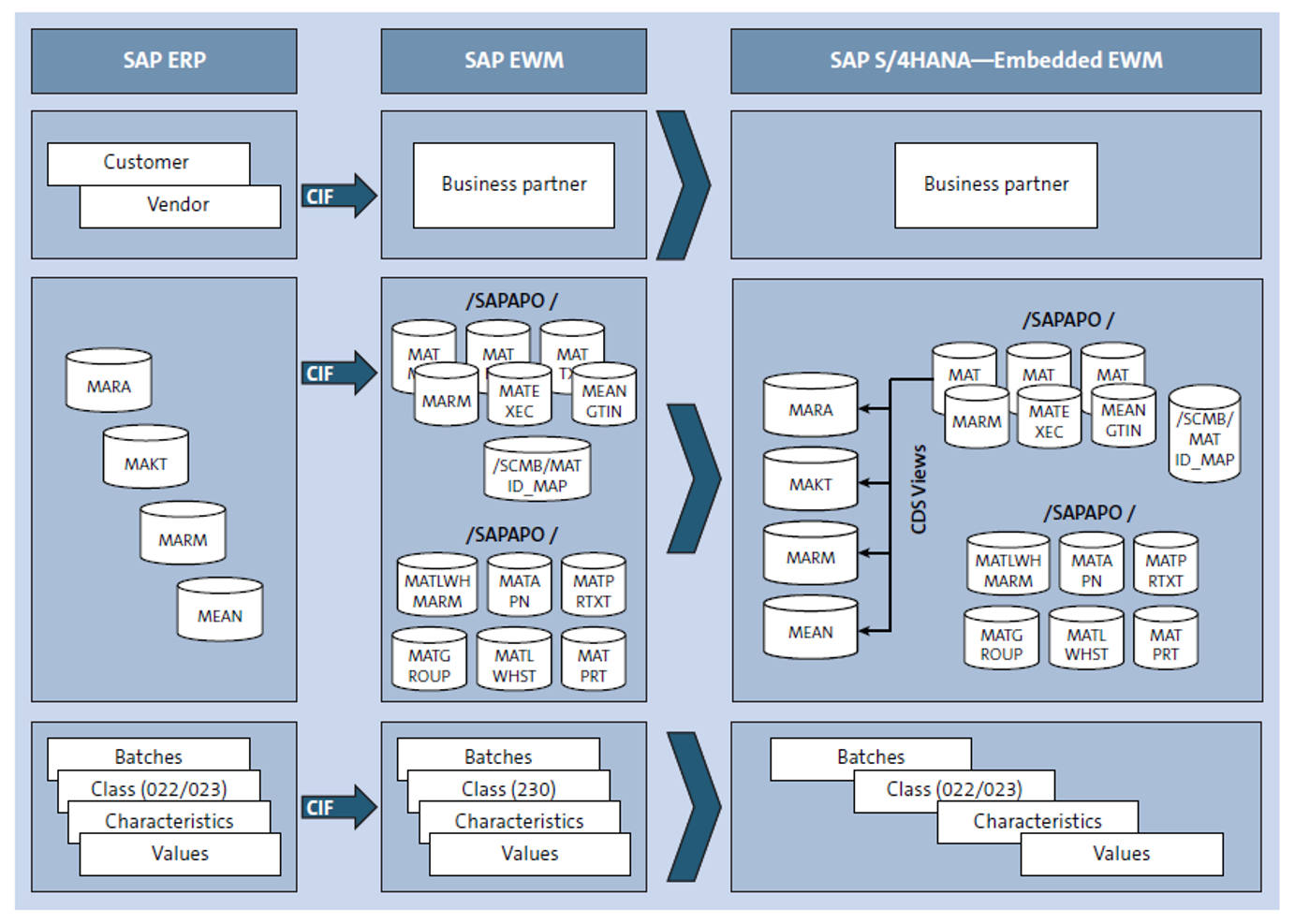
SAP added [machine learning capabilities](https://learning.sap-press.com/intelligent-technologies#artificial-intelligence) to the suite in 2017 in order to perform easier goods and invoice receipt reconciliation and to automate invoice assignments. In September of that year, transportation management functionality was embedded in SAP S/4HANA. In 2018, predictive accounting functionality was added, and subsequent releases of the solution included additional intelligent technology enhancements in the areas of artificial intelligence, blockchain, and the Internet of Things.
By 2021, SAP released multiple industry-specific offerings of SAP S/4HANA: energy and natural resources, service industries, consumer industries, discrete industries, financial services, and public services.
SAP S/4HANA has continued to receive major annual releases since 2021. The 2022 and 2023 releases expanded embedded AI capabilities, introduced universal parallel accounting for multi-GAAP financial reporting, and deepened integration between SAP S/4HANA and SAP BTP for cloud-native extensibility. The 2023 and 2024 releases placed increasing emphasis on SAP's clean core strategy, which encourages organizations to keep the SAP S/4HANA core as close to standard as possible by moving custom code and extensions to SAP BTP rather than modifying core objects directly. This approach is designed to make upgrades faster, reduce technical debt, and ensure organizations can adopt new SAP S/4HANA innovations without disruption. Joule, SAP's AI copilot, has also been progressively embedded across SAP S/4HANA processes, supporting natural language interaction for tasks in finance, procurement, and supply chain. SAP S/4HANA remains on a development roadmap through at least 2040.
[(Back to ToC.)](https://learning.sap-press.com/sap-s4hana-overview-benefits#table-of-contents)
## What Innovations Does SAP S/4HANA Introduce?
SAP S/4HANA brought about many innovations over its older sibling. Key changes included the development of a brand-new code base; utilization of [SAP HANA](https://learning.sap-press.com/sap-hana)’s in-memory computing architecture, providing the ability to access real-time business statistics and analytics; and the convergence of transactional and analytical systems.
### What New Functionality Is Included in SAP S/4HANA?
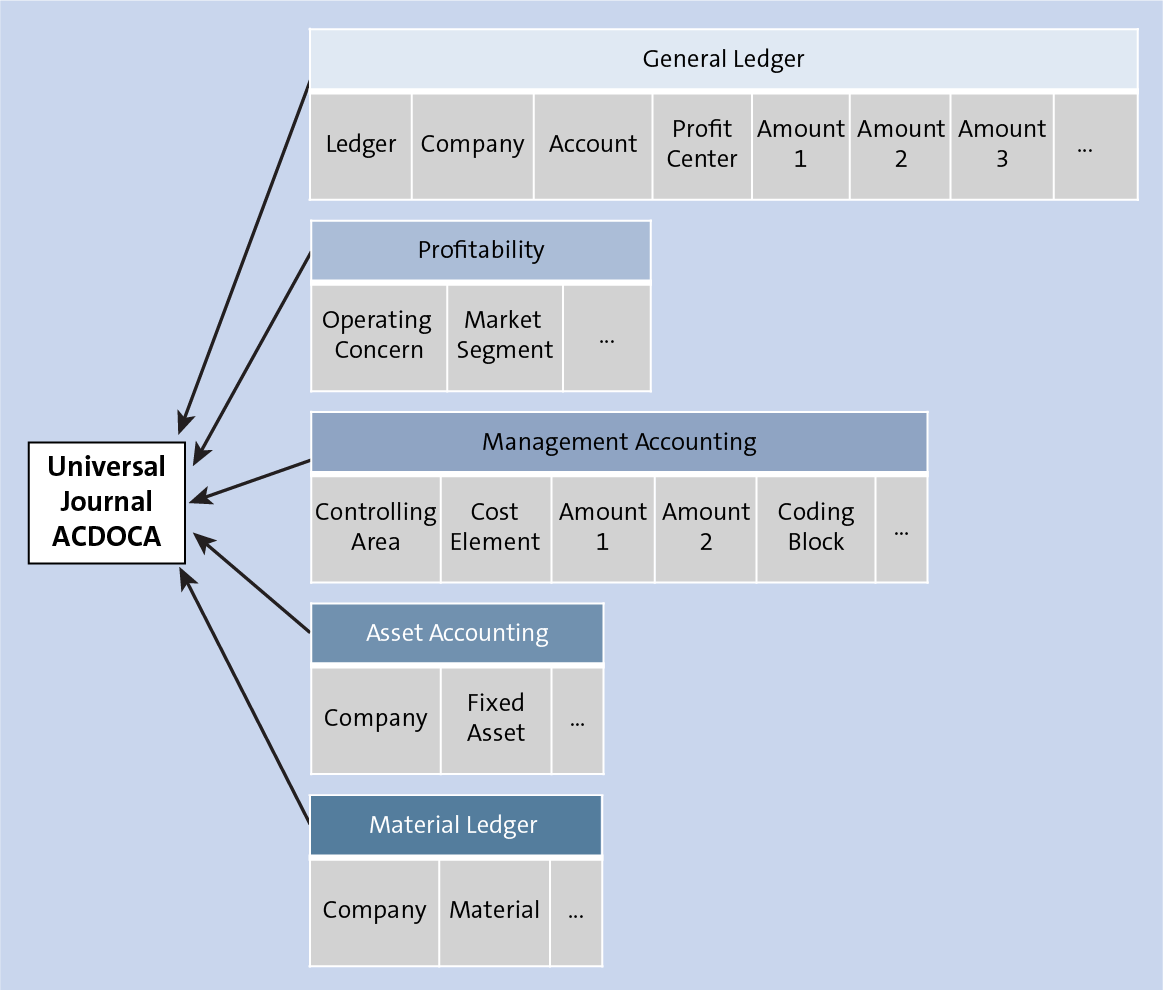
New functionality like the [Universal Journal](https://blog.sap-press.com/sap-s/4hana-finance-innovations-part-3-the-universal-journal) allowed financials users to access a single source of financial truth where both financial and management accounting documents were stored. This led to better reporting, easier access to KPIs utilized by managers, and cockpits tailored to specific end users to help them make more informed decisions. [SAP Fiori](https://learning.sap-press.com/sap-fiori) applications were introduced to provide a better user experience for employees, giving them greater insight into operations and business data in ways that existing T-codes could not.
With the proliferation of intelligent technologies such as machine learning and process automation, enhanced business processes such as predictive accounting were added to the solution as soon as functionality was fleshed out.
### Simplification List
While SAP provided lots of brand-new functionality to SAP S/4HANA, it also went about improving areas in the existing SAP ERP suite as well as previous releases of SAP S/4HANA. These enhancements are discussed in each SAP S/4HANA release’s “simplification list,” which is a long (often 1,000+ page) document that explains what was enhanced and how it is a better option for users over previous functionality.
[(Back to ToC.)](https://learning.sap-press.com/sap-s4hana-overview-benefits#table-of-contents)
## What Modules Are in SAP S/4HANA?
SAP S/4HANA has reorganized core modules found in SAP ERP into what it calls lines of business (LoBs). Current or planned LoBs are discussed below.
### SAP S/4HANA Finance
The SAP S/4HANA Finance LoB focuses on all money-related activities of a business. This includes financial accounting, controlling, treasury and risk management, financial planning, financial close, and consolidation. [Learn more about SAP S/4HANA Finance here](https://learning.sap-press.com/sap-s4hana-finance).
### SAP S/4HANA’s SRM and SCM Offerings
This collection of modules that make up the SAP S/4HANA logistics LoBs contains supplier relationship management and supply chain management solutions previously found in the SAP Business Suite. This was done purposefully by SAP to better distribute functionality and place similar processes together. [Learn more about SAP S/4HANA’s logistics capabilities here](https://learning.sap-press.com/sap-s4hana-logistics).
#### SAP S/4HANA Sourcing and Procurement
The SAP S/4HANA Sourcing and Procurement LoB focuses on the activities surrounding the obtainment of raw materials needed to fulfill orders. This includes extended procurement, operational purchasing, and supplier and [contract management](https://blog.sap-press.com/sales-contract-management-with-sap-s/4hana-logistics).
#### SAP S/4HANA Manufacturing
The SAP S/4HANA Manufacturing LoB focuses on the product creation process. This includes responsive manufacturing, production operations, scheduling and delivery planning, and quality management.
#### SAP S/4HANA Supply Chain
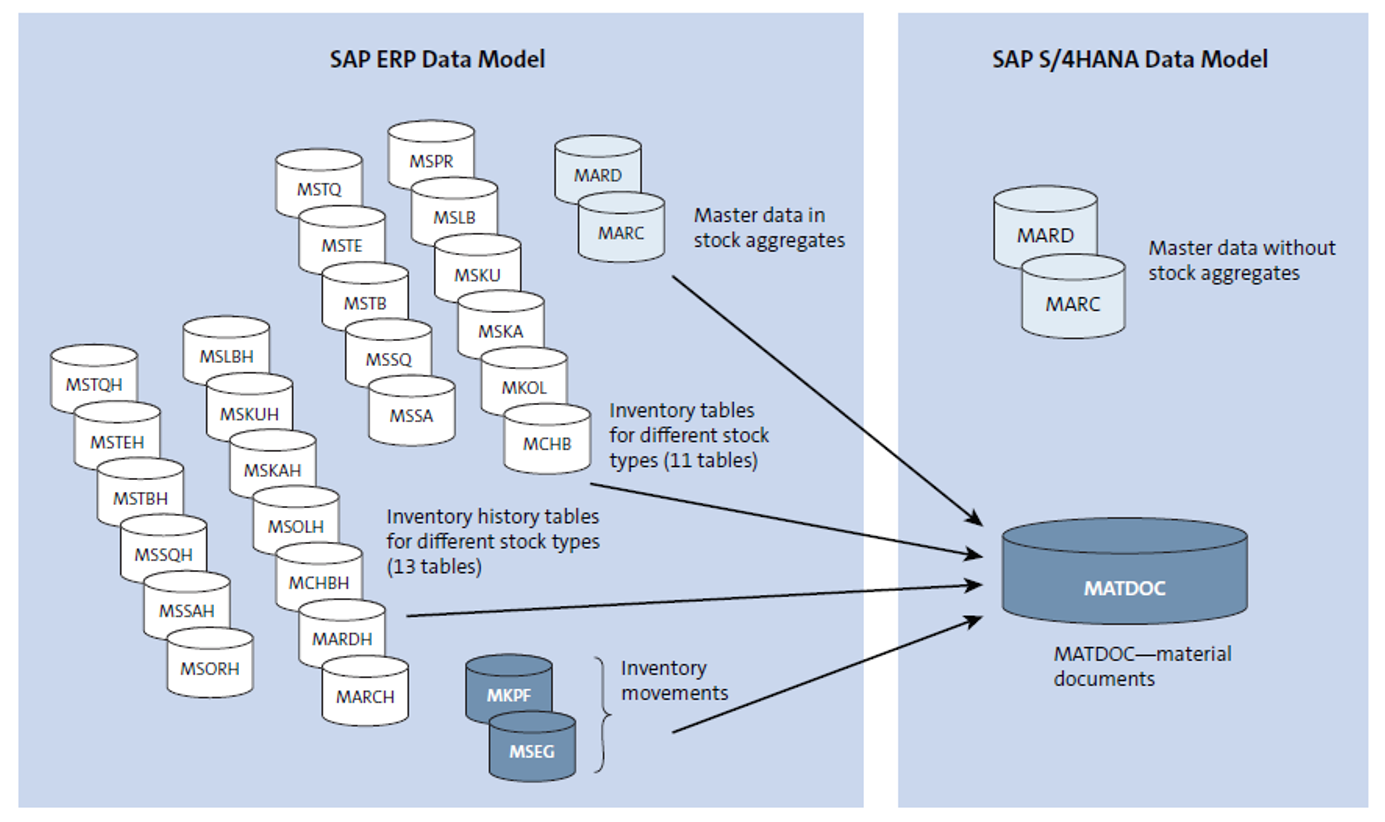
The SAP S/4HANA Supply Chain LoB focuses on overall business planning activities, from pre-planning production runs to dispatching products to purchasers. This includes production planning, batch traceability, warehousing, inventory, and transportation management.
#### SAP S/4HANA Asset Management
The SAP S/4HANA Asset Management LoB focuses on the maintenance of a business’ fixed assets, from tools and machinery all the way up to buildings. This includes [plant maintenance](https://blog.sap-press.com/sap-s4hana-asset-management-plants-from-a-maintenance-perspective) and EHS monitoring.
### SAP S/4HANA Sales
The SAP S/4HANA Sales LoB focuses on the [activities associated with fulfilling sales orders](https://blog.sap-press.com/key-functionality-of-sap-s4hana-sales). This includes pricing, sales inquiries and quotes, sales contracts and agreements, free-of-charge orders, available-to-promise checks, incompletion checks, repair orders, individual requirements, return authorizations, credit and debit memo requests, picking and packing, billing, and revenue recognition.
### SAP S/4HANA R&D/Engineering
The SAP S/4HANA R&D LoB focuses on the lifecycle of a product. This includes defining the product structure and bill of materials, product lifecycle costing, managing portfolios and projects, managing innovation, managing chemical data and other sensitive materials used in development, and staying compliant with safety and health regulations.
### SAP Human Capital Management for SAP S/4HANA
SAP Human Capital Management for S/4HANA was released in 2022 and provides HCM functionality in the new suite. There is no plan to further update this line of business with new functionality. SAP recommends integrating SAP S/4HANA with [SAP SuccessFactors](https://learning.sap-press.com/sap-successfactors) for cloud-based HR.
[(Back to ToC.)](https://learning.sap-press.com/sap-s4hana-overview-benefits#table-of-contents)
## How Can You Deploy SAP S/4HANA?
There are multiple avenues through which SAP S/4HANA can be deployed. Here’s a brief overview of each.
### On-Premise
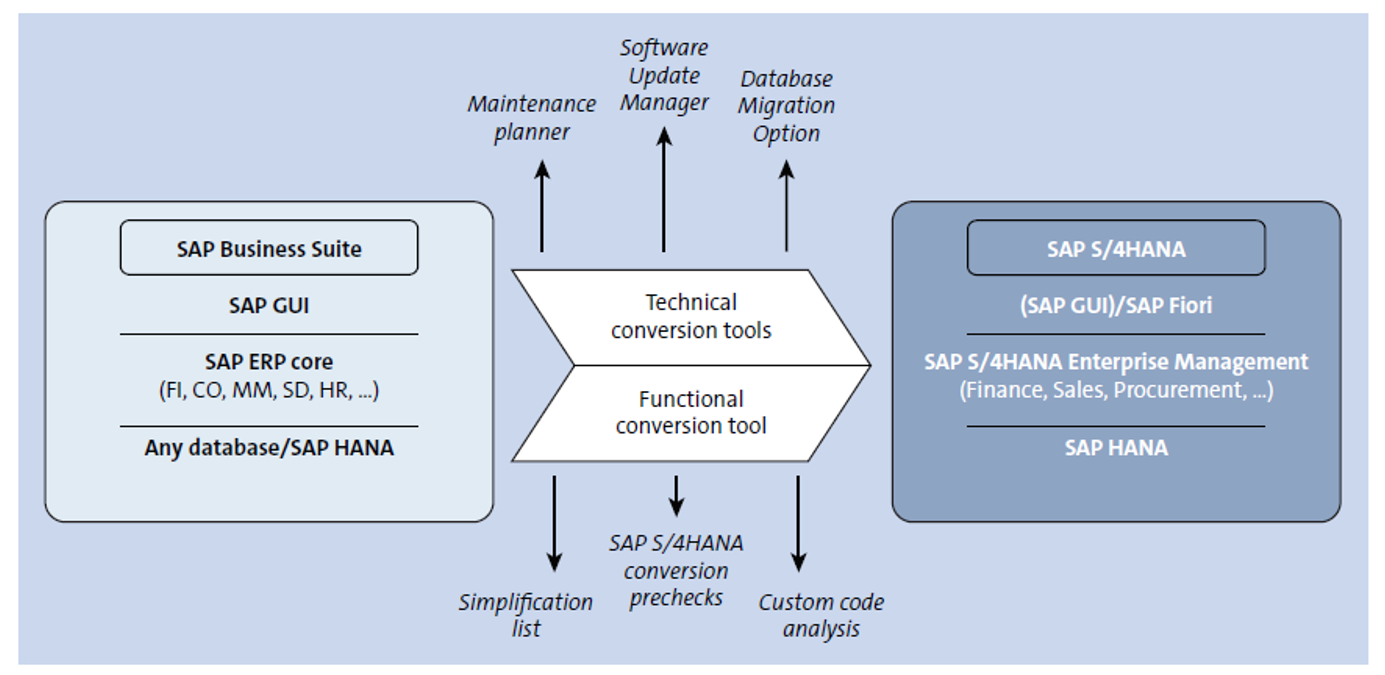
An SAP S/4HANA on-premise deployment encompasses traditional in-house IT infrastructure models. This deployment model describes an instance of SAP S/4HANA that is physically hosted on customer property. Customers can choose from a system conversion (brownfield) implementation, which takes an existing SAP environment and transforms it into SAP S/4HANA; a new (greenfield) implementation, which migrates existing business data into a brand-new SAP S/4HANA system; or selective data transition, which uses shell conversion to reuse existing ERP processes in the new system.
### Cloud
There are multiple cloud options for SAP S/4HANA deployment, all of which involve the use of external cloud integration.
- An **SAP S/4HANA Cloud** deployment provides SAP S/4HANA functionality by placing a customer’s instance of the solution on a partitioned cloud server alongside other customers. The functional scope is limited due to its standardized setup.
- A **private cloud** deployment provides SAP S/4HANA functionality without the need for the customer to maintain the technical backend. It is great for companies running SAP ERP who already have some cloud experience and infrastructure; with this, they’re able to host the solution on their own cloud without having to share space with other tenants, as the standard SAP S/4HANA Cloud deployment provides.
- The [**RISE with SAP** license](https://blog.sap-press.com/what-is-rise-with-sap) provides access to either an SAP S/4HANA Cloud or SAP S/4HANA hosted on a private cloud.
### Hybrid
A hybrid SAP S/4HANA instance provides a combination of both on-premise and cloud deployments. This may be done for a number of reasons, including testing the feasibility of both instances or hosting an on-premise deployment at headquarters while utilizing a cloud deployment in a satellite office.
[(Back to ToC.)](https://learning.sap-press.com/sap-s4hana-overview-benefits#table-of-contents)
## SAP S/4HANA Release Cycle
SAP S/4HANA receives multiple updates a year. Cloud-deployed instances receive quarterly updates, while on-premise deployments are updated once a year, usually in September.
The naming conventions for SAP S/4HANA releases follow a four-digit year/month format. For example, the 2102 release of SAP S/4HANA Cloud refers to the release that came out in the year 2021 (21) in the month of February (02).
[(Back to ToC.)](https://learning.sap-press.com/sap-s4hana-overview-benefits#table-of-contents)
Additional SAP S/4HANA Definitions
In addition to the information laid out above, there are a handful of important SAP S/4HANA terms you should also be familiar with. Here they are in list form:
- - **Central Finance:** An implementation option that allows organizations running SAP ERP or third-party ERP systems to connect to a single SAP S/4HANA Finance instance for centralized reporting and processing, without requiring a full system migration. [Learn more about Central Finance here.](https://blog.sap-press.com/what-is-sap-central-finance)
- **Clean Core:** A strategy for SAP S/4HANA implementations that keeps the core system as close to SAP standard as possible by moving custom code and extensions outside the core using SAP BTP and released APIs, making upgrades faster and reducing long-term maintenance risk.
- **Embedded functionality:** Functionality that is directly written into the code of SAP S/4HANA rather than existing as a separate add-on, such as extended warehouse management (EWM) and transportation management.
- **RISE with SAP:** SAP's cloud transformation journey and commercial offering for moving to SAP S/4HANA Cloud, now packaged primarily as SAP Cloud ERP Private. The specific services bundled within the offering have evolved significantly since its 2021 launch, and organizations evaluating or renewing contracts should confirm current inclusions directly with SAP, as components such as SAP Datasphere and Joule are no longer included by default.
- **SAP Activate:** SAP's implementation methodology for SAP projects, including SAP S/4HANA migrations and new implementations, which combines agile practices with SAP Best Practices content and guided configuration. Learn more about SAP Activate here.
- **SAP Analytics Cloud:** A cloud-based planning, analytics, and predictive solution that integrates with SAP S/4HANA to enable users to view and analyze financial and operational data in real time. [Learn more about SAP Analytics Cloud here.](https://learning.sap-press.com/sap-analytics-cloud)
- **SAP Best Practices:** A set of preconfigured processes and content that helps organizations quickly configure and deploy SAP S/4HANA based on industry-standard business scenarios.
- **SAP Business Technology Platform:** SAP's cloud platform for application development, integration, data management, automation, and AI, used to extend and connect SAP S/4HANA without modifying the core system. [Learn more about SAP BTP here.](https://learning.sap-press.com/sap-btp)
- **SAP BW/4HANA:** SAP's current data warehouse solution, optimized for SAP HANA, used for storing and analyzing large volumes of business data from SAP S/4HANA and other sources. [Learn more about SAP BW/4HANA here.](https://learning.sap-press.com/sap-bw4hana)
- **SAP Customer Experience (SAP CX):** SAP's flagship customer relationship management (CRM) solution and successor to SAP CRM, formerly known as SAP C/4HANA, covering sales, marketing, commerce, and customer service.
- **SAP S/4HANA Selective Data Transition:** A migration approach that allows organizations to move to SAP S/4HANA while selectively choosing which data, organizational structures, or company codes to transfer, rather than converting the entire existing system at once.
[(Back to ToC.)](https://learning.sap-press.com/sap-s4hana-overview-benefits#table-of-contents)
## FAQ
Here are answers to some of the most common things SAP learners and implementers want to know.
*Is SAP S/4HANA replacing SAP ECC?*
Yes. SAP S/4HANA is the successor to SAP ERP (also known as SAP ECC). SAP announced it would stop providing mainstream support for SAP ECC in 2027 (with extended support available through 2030), making SAP S/4HANA the go-forward solution for enterprise resource planning. [You can learn more how SAP ECC and SAP S/4HANA compare by reading this post](https://blog.sap-press.com/key-differences-between-sap-ecc-and-sap-s4hana-a-detailed-comparison).
*How long does it take to implement SAP S/4HANA?*
Implementation time can vary depending on factors like system complexity, deployment method, and business requirements. While exact timelines aren’t provided in this article, options like brownfield, greenfield, or selective data transition each carry different time investments.
***When should we begin our SAP S/4HANA migration? Now or closer to 2027?***
SAP will support [SAP ERP](https://learning.sap-press.com/what-is-sap/#sap-erp) up to 2027. In addition, SAP announced that new functionality will only be made available on [SAP S/4HANA](https://learning.sap-press.com/sap-s4hana). As such, many companies will choose to convert much sooner. If I’m not mistaking, SAP ERP was released back in 2005. The question you should ask yourself, do you want to be on a software which was released 15 years ago? If you want to make use of new functionalities and innovations, I think not. (Thanks to Bert Vanstechelman for this answer!)
*What’s the difference between cloud and on-premise?*
An on-premise deployment means the system is hosted and maintained in-house. SAP S/4HANA Cloud offers a standardized solution hosted externally, with multiple cloud flavors including public cloud and private cloud. A hybrid model combines both approaches for flexibility.
*What are SAP S/4HANA lines of business (LoBs)?*
LoBs in SAP S/4HANA are reorganized groupings of modules from SAP ECC. These include areas like Finance, Sales, Procurement, Manufacturing, and Supply Chain, providing tailored tools for different parts of a business. [Learn more in the modules section here](https://learning.sap-press.com/sap-s4hana-overview-benefits#sap-s4hana-lines-of-business).
*What is the simplification list in SAP S/4HANA?*
The simplification list is a document SAP provides with each release. It outlines technical and functional changes compared to older systems, often explaining what was removed or enhanced and why.
***Do you need an SAP S/4HANA license to do a readiness check and other preparational tasks prior to an implementation?***
An SAP S/4HANA license is not needed to use the verification tools such as the readiness check, simplification check, and the custom code migration cockpit. The custom code migration cockpit needs to be deployed on an SAP S/4HANA system, which needs to be available in your environment. If none is available, you can use one from the SAP Cloud Appliance Library or use Custom Code Migration from SAP BTP if you have a subscription. (Thanks to Mark Mergaerts, Bert Vanstechelman, and Nick Mahieu for this answer!)
[(Back to ToC.)](https://learning.sap-press.com/sap-s4hana-overview-benefits#table-of-contents)
## Additional Resources
Want to learn more about SAP S/4HANA? Additional information can be found in the blog posts and books listed below.
### SAP S/4HANA Blog Posts
SAP S/4HANA Basics
These posts introduce SAP S/4HANA for newcomers and those evaluating a migration, covering what the platform is, how it differs from SAP ECC and other ERP systems, the available versions, technical foundations, and how to get started with a trial system.
- - ["How SAP S/4HANA Differs from Other ERP Systems](https://blog.sap-press.com/how-sap-s4hana-differs-from-other-erp-systems)"
- "[Key Differences Between SAP ECC and SAP S/4HANA: A Detailed Comparison](https://blog.sap-press.com/key-differences-between-sap-ecc-and-sap-s4hana-a-detailed-comparison)"
- "[Moving from SAP ECC to SAP S/4HANA: Key SAP ERP Modules and Their Replacements](https://blog.sap-press.com/moving-from-sap-ecc-to-sap-s4hana-key-sap-erp-modules-and-their-replacements)"
- "[The Roadmap to SAP S/4HANA and Its Innovations](https://blog.sap-press.com/the-roadmap-to-sap-s4hana)"
- "[SAP ECC vs. SAP S/4HANA: Technical Foundations](https://blog.sap-press.com/sap-ecc-vs-sap-s4hana-technical-foundations)"
- "[What Is SAP S/4HANA?](https://blog.sap-press.com/what-is-sap-s4hana)"
- "[What Are the Different Versions of SAP S/4HANA?](https://blog.sap-press.com/what-are-the-different-versions-of-sap-s4hana)"
- "[What to Know About the SAP S/4HANA Trial System](https://blog.sap-press.com/what-to-know-about-the-sap-s4hana-trial-system)"
SAP S/4HANA Projects and Implementation
These posts cover the lifecycle of an SAP S/4HANA implementation or migration, including methodology guidance using SAP Activate, migration options and planning considerations, system conversion, data migration, custom code evaluation, organizational change management, and lessons learned from real-world projects.
- - "[5 Golden Rules for Implementing SAP S/4HANA with SAP Activate](https://blog.sap-press.com/5-golden-rules-for-implementing-sap-s4hana-with-sap-activate)"
- "[5 Key SAP Implementation Lessons from Industry Leaders](https://blog.sap-press.com/5-key-sap-implementation-lessons-from-industry-leaders)"
- "[7 Things to Consider Before an SAP S/4HANA Migration](https://blog.sap-press.com/7-things-to-consider-before-an-sap-s/4hana-migration)"
- "[Case Study: Lessons Learned From A Tough SAP S/4HANA Implementation](https://blog.sap-press.com/case-study-lessons-learned-from-a-tough-sap-s4hana-implementation)"
- "[How to Best Navigate the Journey to SAP S/4HANA: Expert Guidance from SAP PRESS Authors](https://blog.sap-press.com/how-to-best-navigate-the-journey-to-sap-s4hana)"
- "[How to Evaluate Custom Code Usage Data Ahead of An SAP S/4HANA Migration](https://blog.sap-press.com/how-to-evaluate-custom-code-usage-data-ahead-of-an-sap-s4hana-migration)"
- "[How Long Does it Take to Implement SAP S/4HANA?](https://blog.sap-press.com/how-long-does-it-take-to-implement-sap-s4hana)"
- "[How to Make the Most of an SAP S/4HANA System Conversion (Q&A)](https://blog.sap-press.com/how-to-make-the-most-of-an-sap-s4hana-system-conversion-qa)"
- "[Installing an SAP S/4HANA On-Premise System](https://blog.sap-press.com/installing-an-sap-s/4hana-on-premise-system)"
- "[Mapping Business Functions of a Company in the SAP System](https://blog.sap-press.com/mapping-business-functions-of-company-in-sap)"
- "[Mastering SAP S/4HANA Projects with SAP Activate: Expert Insights from Sven Denecken, Jan Musil, and Srivatsan Santhanam](https://blog.sap-press.com/mastering-sap-s4hana-projects-with-sap-activate-expert-insights)"
- "[Migration Options for Moving to SAP S/4HANA](https://blog.sap-press.com/migration-options-for-moving-to-sap-s4hana)"
- "[Organizational Change Management (OCM) in SAP Activate](https://blog.sap-press.com/organizational-change-management-ocm-in-sap-activate)"
- "[Planning an SAP S/4HANA System Conversion](https://blog.sap-press.com/planning-an-sap-s4hana-system-conversion)"
- "[SAP S/4HANA Conversion: What is the Software Update Manager?](https://blog.sap-press.com/sap-s4hana-conversion-what-is-the-software-update-manager)"
- "[SAP S/4HANA Implementation Best Practices](https://blog.sap-press.com/sap-s4hana-implementation-best-practices)"
- "[SAP S/4HANA Migration Options and Considerations](https://blog.sap-press.com/sap-s4hana-migration-options-and-considerations)"
- "[SAP S/4HANA Migration with SAP Activate: The Prepare Phase](https://blog.sap-press.com/-sap-s4hana-migration-with-sap-activate-prepare-phase)"
- "[SAP S/4HANA Project Planning: Things to Know](https://blog.sap-press.com/project-planning-with-sap-s4hana-things-to-know)"
- "[SAP S/4HANA Transition Net: The 5 Big Questions Prior to a Project](https://blog.sap-press.com/sap-s4hana-transition-net)"
- "[The SAP Activate Roadmap for SAP S/4HANA Upgrades](https://blog.sap-press.com/the-sap-activate-roadmap-for-sap-s4hana-upgrades)"
- "[What Are the Data Migration Phases for an SAP S/4HANA Project?](https://blog.sap-press.com/what-are-the-data-migration-phases-for-an-sap-s4hana-project)"
- "[What Is the SAP S/4HANA Migration Object Modeler?](https://blog.sap-press.com/what-is-the-sap-s4hana-migration-object-modeler)"
- "[What is Selective Data Transition for SAP S/4HANA?](https://blog.sap-press.com/what-is-selective-data-transition-for-sap-s4hana)"
- "[When to Choose a Single Instance of SAP S/4HANA Versus Multiple Instances](https://blog.sap-press.com/when-to-choose-a-single-instance-of-sap-s4hana-versus-multiple-instances)"
- "[Why Implement Your SAP S/4HANA System with SAP Activate?](https://blog.sap-press.com/why-implement-your-sap-s4hana-system-with-sap-activate)"
SAP S/4HANA Tech and Development
These posts cover technical and development topics for SAP S/4HANA, including in-app extensibility, custom business object creation, DevOps, EDI integration, API connectivity, dialog processing, database administration tools, and add-on solutions.
- - "[An End-to-End DevOps Scenario for SAP S/4HANA](https://blog.sap-press.com/an-end-to-end-devops-scenario-for-sap-s4hana)"
- "[Connecting SAP API Business Hub to SAP S/4HANA Cloud](https://blog.sap-press.com/connecting-sap-api-business-hub-to-sap-s4hana-cloud)"
- "[Dialog Processing in SAP S/4HANA](https://blog.sap-press.com/dialog-processing-in-sap-s4hana)"
- "[EDI Integration with SAP S/4HANA](https://blog.sap-press.com/edi-integration-with-sap-s4hana)"
- "[How to Create New Custom Business Objects in SAP S/4HANA](https://blog.sap-press.com/how-to-create-new-custom-business-objects-in-sap-s/4hana)"
- "[In-App Enhancements for SAP S/4HANA](https://blog.sap-press.com/in-app-enhancements-for-sap-s4hana)"
- "[SAP S/4HANA: Database Administration Tools You Should Know](https://blog.sap-press.com/sap-s4hana-database-administration-tools-you-should-know)"
- "[SAP Solutions to Add on to an SAP S/4HANA System](https://blog.sap-press.com/sap-solutions-to-add-on-to-an-sap-s4hana-system)"
SAP S/4HANA Cloud and Deployment
These posts cover cloud deployment options and considerations for SAP S/4HANA, including the differences between on-premise and cloud editions, SAP S/4HANA Cloud Public Edition, system landscape design, integration strategy, testing, and cloud best practices.
- - "[Integration Strategy for SAP S/4HANA Cloud](https://blog.sap-press.com/integration-strategy-for-sap-s4hana-cloud)"
- "[SAP S/4HANA Cloud Deployment Options](https://blog.sap-press.com/sap-s4hana-cloud-deployment-options)"
- "[Testing SAP S/4HANA Cloud Implementations](https://blog.sap-press.com/testing-sap-s4hana-cloud-implementations)"
- "[The SAP S/4HANA Cloud Three-System Landscape](https://blog.sap-press.com/the-sap-s4hana-cloud-three-system-landscape)"
- "[What Are the Best Practices for SAP S/4HANA Cloud?](https://blog.sap-press.com/what-are-the-best-practices-for-sap-s4hana-cloud)"
- "[What Are the Differences Between SAP S/4HANA and SAP S/4HANA Cloud?](https://blog.sap-press.com/what-are-the-differences-between-sap-s4hana-and-sap-s4hana-cloud)"
- "[Why Choose SAP S/4HANA Cloud Public Edition? Key Benefits and Use Cases](https://blog.sap-press.com/why-choose-sap-s4hana-cloud-public-edition-key-benefits-and-use-cases)"
SAP S/4HANA Analytics and Intelligence
These posts cover analytics and intelligent technologies embedded in SAP S/4HANA, including the virtual data model (VDM), embedded predictive analytics, machine learning capabilities, and business reporting features.
- - - "[An Overview of the SAP S/4HANA VDM](https://blog.sap-press.com/an-overview-of-the-sap-s4hana-vdm)"
- "[Embedded Intelligent Technologies with SAP S/4HANA: Predictive Analytics and Machine Learning](https://blog.sap-press.com/embedded-intelligent-technologies-with-sap-s4hana-predictive-analytics-and-machine-learning)"
- "[Key Benefits of Business Reporting in SAP S/4HANA](https://blog.sap-press.com/key-benefits-of-business-reporting-in-sap-s4hana)"
- "[Machine Learning with SAP S/4HANA](https://blog.sap-press.com/machine-learning-with-sap-s4hana)"
### SAP S/4HANA Books by SAP PRESS
- - [*SAP S/4HANA: An Introduction*](https://www.sap-press.com/sap-s4hana_5973/?utm_source=sappressblog&utm_medium=referral&utm_campaign=Blogs&utm_term=s4hanapillar&utm_content=2653)
- - [*Architecting EDI for SAP S/4HANA*](https://www.sap-press.com/architecting-edi-for-sap-s4hana_5736/?utm_source=sappressblog&utm_medium=referral&utm_campaign=Blogs&utm_term=s4hanapillar&utm_content=2458)
- [*Auditing SAP S/4HANA*](https://www.sap-press.com/auditing-sap-s4hana_5526/?utm_source=sappressblog&utm_medium=referral&utm_campaign=Blogs&utm_term=sapcertificationspillar&utm_content=2263)
- [*Authorizations in SAP S/4HANA and SAP Fiori*](https://www.sap-press.com/authorizations-in-sap-s4hana-and-sap-fiori_5203/?utm_source=sappressblog&utm_medium=referral&utm_campaign=Blogs&utm_term=s4hanapillar&utm_content=2036)
- [*Data Migration for SAP: SAP S/4HANA and Cloud Solutions*](https://www.sap-press.com/data-migration-for-sap_5817/?utm_source=sappressblog&utm_medium=referral&utm_campaign=Blogs&utm_term=s4hanapillar&utm_content=2522)
- [*Document Management with SAP S/4HANA*](https://www.sap-press.com/document-management-with-sap-s4hana_5204/?utm_source=sappressblog&utm_medium=referral&utm_campaign=Blogs&utm_term=s4hanapillar&utm_content=2039)
- [*Migrating Custom Code to SAP S/4HANA*](https://www.sap-press.com/migrating-custom-code-to-sap-s4hana_5131/?utm_source=sappressblog&utm_medium=referral&utm_campaign=Blogs&utm_term=s4hanapillar&utm_content=1994)
- [Migrating to SAP S/4HANA: Operating Models, Migration Scenarios, Tools, and Implementation](https://www.sap-press.com/migrating-to-sap-s4hana_6256/?utm_source=sappressblog&utm_medium=referral&utm_campaign=Blogs&utm_term=s4hanapillar&utm_content=2806)
- [*Reporting with SAP S/4HANA: Business User Guide*](https://www.sap-press.com/reporting-with-sap-s4hana-business-user-guide_5527/?utm_source=sappressblog&utm_medium=referral&utm_campaign=Blogs&utm_term=sapcertificationspillar&utm_content=2267)
- [*Settlement Management with SAP S/4HANA: Rebates, Commissions, and Royalties*](https://www.sap-press.com/settlement-management-with-sap-s4hana_5516/?utm_source=sappressblog&utm_medium=referral&utm_campaign=Blogs&utm_term=s4hanapillar&utm_content=2261)
- [SAP Activate: Project Management for SAP S/4HANA Cloud and SAP S/4HANA](https://www.sap-press.com/sap-activate_5966/?utm_source=sappressblog&utm_medium=referral&utm_campaign=Blogs&utm_term=s4hanapillar&utm_content=2650)
- [*Selective Data Transition to SAP S/4HANA*](https://www.sap-press.com/selective-data-transition-to-sap-s4hana_6371/?utm_source=sappressblog&utm_medium=referral&utm_campaign=Blogs&utm_term=s4hanapillar&utm_content=2886)
- [SAP Fiori Apps for SAP S/4HANA: The Quick Reference Guide](https://www.sap-press.com/sap-fiori-apps-for-sap-s4hana_6120/?utm_source=sappressblog&utm_medium=referral&utm_campaign=Blogs&utm_term=s4hanapillar&utm_content=2723)
- [*SAP S/4HANA Cloud: An Introduction*](https://www.sap-press.com/sap-s4hana-cloud_5457/?utm_source=sappressblog&utm_medium=referral&utm_campaign=Blogs&utm_term=s4hanapillar&utm_content=2210)
- [*SAP S/4HANA Embedded Analytics: The Comprehensive Guide*](https://www.sap-press.com/sap-s4hana-embedded-analytics_5226/?utm_source=sappressblog&utm_medium=referral&utm_campaign=Blogs&utm_term=s4hanapillar&utm_content=2050)
- [*SAP S/4HANA System Conversion Guide*](https://www.sap-press.com/sap-s4hana-system-conversion-guide_5035/?utm_source=sappressblog&utm_medium=referral&utm_campaign=Blogs&utm_term=s4hanapillar&utm_content=1944)
- [*Using SAP S/4HANA: An Introduction for Business Users*](https://www.sap-press.com/using-sap-s4hana_5065/?utm_source=sappressblog&utm_medium=referral&utm_campaign=Blogs&utm_term=s4hanapillar&utm_content=1956)
### SAP S/4HANA Videos
#### SAP S/4HANA Overview
- - - [How SAP S/4HANA Provides Process Improvement Over SAP ERP](https://www.youtube.com/watch?v=1Cf6OwryQcw)
- [SAP S/4HANA Architecture Q&A with Authors Tobias Stein, Jochen Boeder, and Wolfram Kleis](https://www.youtube.com/watch?v=JUJvFYralOs)
- [SAP S/4HANA Q&A with Author Devraj Bardhan](https://youtu.be/G9V4ER-vTxY)
- [What Are the Different Versions of SAP S/4HANA?](https://www.youtube.com/watch?v=L2oPQGCjGCM)
#### SAP S/4HANA Projects and Migration
- - - [Brownfield SAP S/4HANA Migration: Transforming Systems While Retaining Data Integrity](https://www.youtube.com/watch?v=1mf9I3bqUeo)
- [Can a Brownfield Migration Move Just Some Data?](https://youtu.be/8V5Pu96TKXY)
- [Can You Combine a System Conversion with an SAP S/4HANA Migration?](https://www.youtube.com/watch?v=QZ9Nf0Md-Uk)
- [Can You Move Legacy Programs into an SAP S/4HANA System?](https://youtu.be/iS9V9aLygl0)
- [Can You Use SAP Activate for SAP S/4HANA Version Upgrades?](https://youtu.be/e7jcC4mORSE)
- [Does SAP Activate Work for SAP S/4HANA Brownfield Implementations?](https://youtu.be/2_Vt7ugMIWk)
- [Greenfield Implementation in SAP S/4HANA: Starting Fresh with Data Migration and Simplification](https://www.youtube.com/watch?v=0LKUvRJLC70)
- [The Importance of an SAP S/4HANA Roadmap](https://youtu.be/2q8rFtAo76w)
- [Is SAP Activate Only Available for SAP S/4HANA?](https://youtu.be/ADtpwG56aP0)
- [Mastering SAP S/4HANA Migration: Selective Data Transition Explained](https://www.youtube.com/watch?v=1yupn6KwtRw)
- [SAP S/4HANA Migration Q&A with Authors Frank Finkbohner and Boris Rubarth](https://youtu.be/SyQfa1c05Wk)
- [SAP S/4HANA System Conversion Q&A with Expertum's Mark Mergaerts, Bert Vanstechelman, & Nick Mahieu](https://www.youtube.com/watch?v=TJTuMwqE6PQ)
- [What Are the Data Migration Phases in SAP S/4HANA?](https://www.youtube.com/watch?v=CvDNsgMDB9I)
- [When Does SAP ERP Support End?](https://www.youtube.com/watch?v=d3FpSPU3Qmg)
- [Who Should Be Involved in an SAP S/4HANA Migration?](https://youtu.be/DBOHybDU23c)
- [Why You Shouldn't Wait on Your SAP S/4HANA Migration](https://www.youtube.com/watch?v=RCJ7BWjVjik)
#### SAP S/4HANA Cloud Deployment
- - - [Best Practices for Those on SAP S/4HANA Cloud](https://www.youtube.com/watch?v=RWCur5g8g84)
- [Choosing Between Cloud or On-Premise SAP S/4HANA](https://www.youtube.com/watch?v=_ptEyDQyesE)
- [How to Integrate External Systems with SAP S/4HANA Cloud](https://www.youtube.com/watch?v=ozHoaMHAPfE)
- [SAP S/4HANA Cloud Q&A with SAP's Almer Podbicanin and Marcus Homann](https://www.youtube.com/watch?v=TgnGzd_qL1c)
- [What Are the Differences Between SAP S/4HANA and SAP S/4HANA Cloud?](https://www.youtube.com/watch?v=3Q4eXN9_0Cw)
#### SAP S/4HANA Tech and Development
- - - [ABAP and SAP S/4HANA](https://youtu.be/12AcjcU9gHM)
- [How Does SAP S/4HANA Affect Basis Administrators?](https://www.youtube.com/watch?v=cwmjXSRLiq0)
- [How AI and SAP S/4HANA Fit Together for Business](https://www.youtube.com/watch?v=jFcYdRqt2jU)
### What Next?
Learn more SAP from our official Learning Center.[](https://learning.sap-press.com)
And to continue learning even more about SAP S/4HANA, sign up for our weekly blog recap here
[](https://www.sap-press.com/)
[Visit the SAP PRESS Store](https://sap-press.com/)
-
-
-
-
-
- [Home](https://sap-press.com/)
- [About Us](https://sap-press.com/the-publisher/)
- [Legal Notes](https://sap-press.com/legal-notes/)
- [Privacy Policy](https://sap-press.com/privacy/)
- [Terms of Use](https://sap-press.com/terms/)
- Change Privacy Options
© 2026 Rheinwerk Publishing, Inc. | Change Privacy Options
```json
{
"@context" : "https://schema.org",
"@type" : "TechArticle",
"author" : {
"@type" : "Organization",
"name" : "SAP PRESS",
"url" : "https://www.sap-press.com"
},
"dateModified" : "2026-04-10",
"description" : "A comprehensive overview of SAP S/4HANA covering its history, innovations, lines of business, deployment options (on-premise, cloud, hybrid), release cycle, and migration considerations from SAP ECC.",
"headline" : "SAP S/4HANA Overview and Learning Guide",
"image" : "https://learning.sap-press.com/hubfs/SAP%20S4HANA%20Pillar.jpg",
"publisher" : {
"@type" : "Organization",
"logo" : {
"@type" : "ImageObject",
"url" : "https://learning.sap-press.com/hubfs/rheinwerk-sappress-logo-header-1.svg"
},
"name" : "SAP PRESS",
"url" : "https://www.sap-press.com"
},
"url" : "https://learning.sap-press.com/sap-s4hana-overview-benefits"
}
```
```json
{
"@context" : "https://schema.org",
"@type" : "FAQPage",
"mainEntity" : [ {
"@type" : "Question",
"acceptedAnswer" : {
"@type" : "Answer",
"text" : "Yes. SAP S/4HANA is the successor to SAP ERP (also known as SAP ECC). SAP announced it would stop providing mainstream support for SAP ECC in 2027 (with extended support available through 2030), making SAP S/4HANA the go-forward solution for enterprise resource planning."
},
"name" : "Is SAP S/4HANA replacing SAP ECC?"
}, {
"@type" : "Question",
"acceptedAnswer" : {
"@type" : "Answer",
"text" : "Implementation time can vary depending on factors like system complexity, deployment method, and business requirements. Options like brownfield, greenfield, or selective data transition each carry different time investments."
},
"name" : "How long does it take to implement SAP S/4HANA?"
}, {
"@type" : "Question",
"acceptedAnswer" : {
"@type" : "Answer",
"text" : "SAP will support SAP ERP up to 2027, and new functionality will only be made available on SAP S/4HANA. Many companies choose to convert well before that deadline. The key question is whether you want to continue running software from 2005 when newer innovations are only available on SAP S/4HANA."
},
"name" : "When should we begin our SAP S/4HANA migration?"
}, {
"@type" : "Question",
"acceptedAnswer" : {
"@type" : "Answer",
"text" : "An on-premise deployment means the system is hosted and maintained in-house. SAP S/4HANA Cloud offers a standardized solution hosted externally, with multiple cloud flavors including public cloud and private cloud. A hybrid model combines both approaches for flexibility."
},
"name" : "What's the difference between cloud and on-premise SAP S/4HANA?"
}, {
"@type" : "Question",
"acceptedAnswer" : {
"@type" : "Answer",
"text" : "Lines of business in SAP S/4HANA are reorganized groupings of modules from SAP ECC. These include areas like Finance, Sales, Procurement, Manufacturing, and Supply Chain, providing tailored tools for different parts of a business."
},
"name" : "What are SAP S/4HANA lines of business (LoBs)?"
}, {
"@type" : "Question",
"acceptedAnswer" : {
"@type" : "Answer",
"text" : "The simplification list is a document SAP provides with each release. It outlines technical and functional changes compared to older systems, often explaining what was removed or enhanced and why."
},
"name" : "What is the simplification list in SAP S/4HANA?"
}, {
"@type" : "Question",
"acceptedAnswer" : {
"@type" : "Answer",
"text" : "An SAP S/4HANA license is not needed to use verification tools such as the readiness check, simplification check, and the custom code migration cockpit. The custom code migration cockpit needs to be deployed on an SAP S/4HANA system available in your environment. If none is available, you can use one from the SAP Cloud Appliance Library or use Custom Code Migration from SAP BTP if you have a subscription."
},
"name" : "Do you need an SAP S/4HANA license to do a readiness check and other preparational tasks prior to an implementation?"
} ]
}
```